Catalog
Cast Metal
Pursuing a dual major in art and design, Andrew Werby was fortunate to have Peter Voulkos as a professor. Spanning the gap between art and the crafts in his own work, Voulkos, an eminent ceramist, taught himself, and then his students, the technique of casting metals using the lost wax method. Traditionally, sculptors worked in clay or plaster, bringing their models to a foundry for the labor-intensive—and expensive—process of transforming them into bronze and other metals. This involved making molds from the models, casting them in wax, encasing the wax parts in a temporary mold capable of withstanding high heat, burning out the wax in a kiln, pouring molten metal into the resulting void, then cutting the casting free from its support structures, welding up any holes, then grinding, chasing, polishing and patinating the castings. While paying for all this skilled work is beyond the reach of most sculptors, if they can do it themselves it makes this ancient art form accessible, giving artists control over a valuable means of production.
As Andrew learned to make molds, he became fascinated with that technique, which became the basis of his “Juxtamorphic” style. Upon graduation, he quickly set up his own foundry, enabling him to cast his own work and bring it to completion. Cast metals, including bronze, aluminum, iron, and silver, continue to be a mainstay of his artistic output to this day.
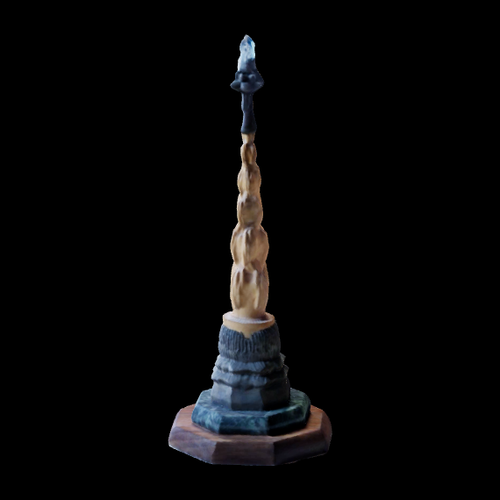 Aquarhin
 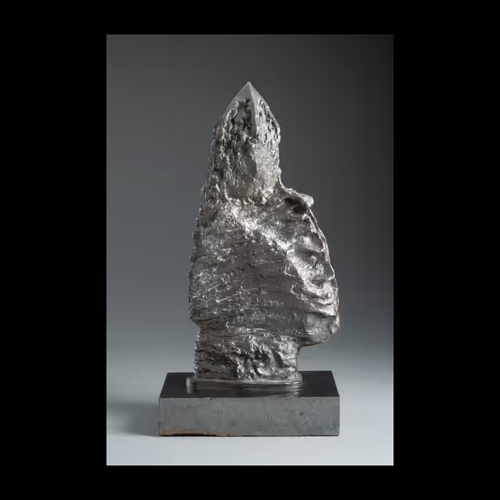 Aruquamoth